
Texas payday and title loan laws: what borrowers should know
By Petra Nathan · Updated 2026-07-22
Texas handles short-term lending differently than most of the country, and that difference matters if you are considering a payday or title loan. Understanding the structure before you sign helps you ask the right questions.
The credit access business model
Most payday and auto title lenders in Texas do not lend their own money directly. Instead, they operate as credit access businesses (CABs), which arrange loans through a third-party lender and charge a separate fee for that service. This structure is why Texas fee amounts can run higher than in states with a direct interest rate cap: the CAB fee sits on top of the underlying loan.
The Office of Consumer Credit Commissioner (OCCC) licenses and regulates these businesses statewide, which means a legitimate storefront should be able to show you its license on request.
What Texas does and does not regulate
| Area | How Texas handles it |
|---|---|
| Statewide interest rate cap | No strict statewide cap on CAB fees |
| Licensing | CABs must be licensed with the OCCC |
| Local ordinances | Many Texas cities cap loan size relative to income and limit rollovers |
| Required disclosures | Lenders must disclose fees and total cost before you sign |
| Loan rollovers | Allowed under state law, though local ordinances can restrict the number |
Why local ordinances matter
Several major Texas cities have passed their own ordinances on top of state law, typically limiting how large a loan can be relative to a borrower’s income and capping how many times a loan can be renewed or rolled over. These ordinances vary by city, so a rule that applies at one location may not apply at another nearby. If you are unsure whether a local ordinance applies, ask the lender directly or check with the city’s consumer protection office.
Reading the disclosure before you sign
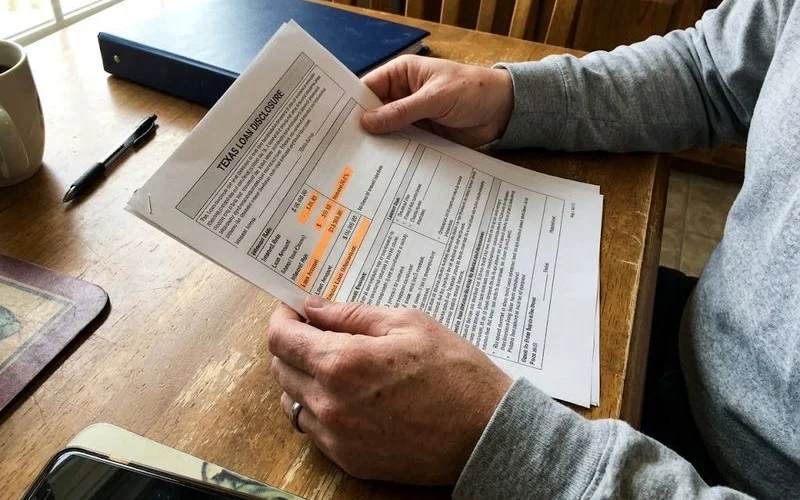
Texas law requires lenders to disclose the fee structure and total repayment amount before you sign. Read this disclosure closely, not just the amount you will walk out with. Two numbers matter most:
- The total dollar amount you will repay, including all fees
- What happens if you cannot repay on the original due date, including any rollover fee
What protections you actually have
Texas borrowers are protected mainly through licensing and disclosure requirements, not a hard interest rate ceiling. That makes it worth doing your own comparison shopping rather than assuming all storefronts price similarly. If a lender will not clearly disclose the total cost before you sign, or pressures you to sign quickly, treat that as a warning sign rather than normal practice.
If you are weighing whether a payday or title loan is the right tool at all, it helps to compare it against other options first, since a personal installment loan or a cash advance from an existing credit line can sometimes cost less overall for the same amount borrowed.
Where to go from here
Once you understand the fee structure that applies to you, comparing licensed lenders in your area is a reasonable way to see actual disclosed terms side by side. This guide is general information, not legal advice. Laws and local ordinances change and vary by city, so confirm current rules with the OCCC or a legal aid organization before you borrow. You can read more about how this directory evaluates and ranks lenders in our ranking methodology.
Questions people ask
- Does Texas cap payday loan interest rates?
- Texas does not cap fees the way many states do. Most payday and title lenders operate as credit access businesses, which are licensed and regulated but not subject to a strict statewide interest rate cap.
- Is there a cooling-off period for payday loans in Texas?
- Some local ordinances in Texas cities limit how many times a loan can be refinanced or rolled over. Rules vary by city, so check whether the specific city you are borrowing in has its own ordinance.
- Who regulates payday and title lenders in Texas?
- The Office of Consumer Credit Commissioner (OCCC) licenses and oversees credit access businesses in Texas, including payday and auto title lenders.
- Can a Texas payday lender garnish my wages?
- A lender generally cannot garnish wages for an unpaid payday loan without first suing you and obtaining a court judgment. Postdated checks and repossession of a titled vehicle work differently and do not require a lawsuit first.