
Auto title loan costs, interest, and repossession risk
By Petra Nathan · Updated 2026-08-05
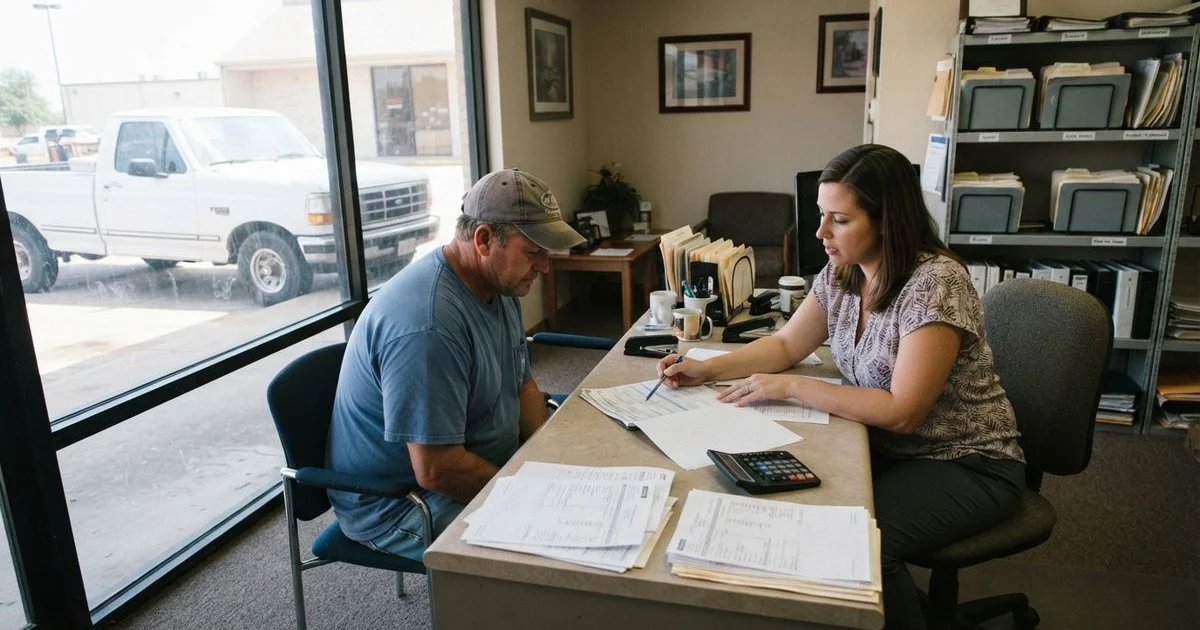
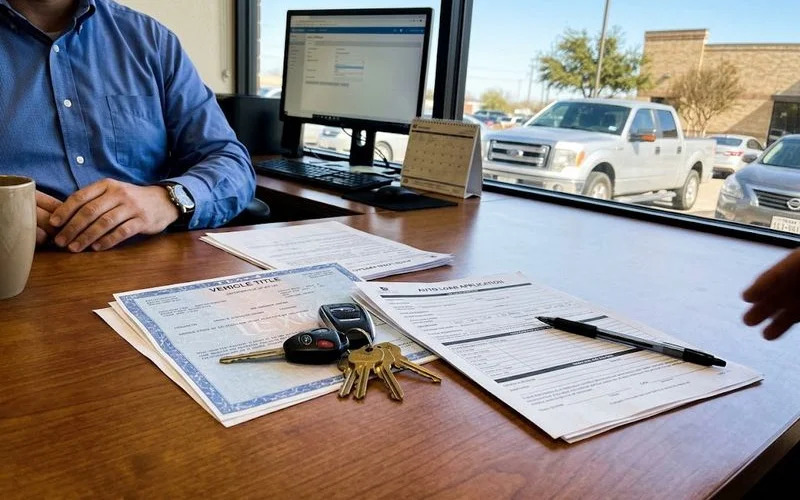
An auto title loan trades your car’s title as collateral for cash, which is why it can offer more money than an unsecured payday loan and why falling behind carries a bigger consequence. Understanding how the amount and cost are calculated helps you weigh whether that tradeoff makes sense.
How lenders calculate what you can borrow
Title lenders base your loan amount on your vehicle’s value, not your income or credit alone. Based on the age-based factors our own auto title loan estimator tool uses as a general reference, newer vehicles typically qualify for a larger percentage of their value than older ones:
| Vehicle age | Typical percentage of value offered |
|---|---|
| 0-3 years old | Around 50% |
| 4-8 years old | Around 40% |
| 9+ years old | Around 30% |
These are general patterns, not a guaranteed offer. Condition, mileage, and whether you still owe money on the vehicle all affect the final amount a specific lender proposes.
What the loan actually costs
Title loans are typically priced with a monthly fee or interest rate applied to the borrowed amount, and terms are often shorter than a traditional auto loan, sometimes 30 days with renewal options, sometimes several months. Ask for the total repayment amount and the APR before agreeing, the same way you would with any other loan. Because the loan is secured by your car, it does not necessarily mean it is cheaper than an unsecured option, it means the lender’s risk is lower, which does not always get passed on to you as savings.
The repossession risk that comes with the collateral
This is the part that separates a title loan from most other short-term borrowing: if you fall behind on payments, the lender can repossess the vehicle under the lien they hold on the title. That risk exists from the day you sign, even if it feels distant while payments are current. Before borrowing against your car, be honest about whether your income can reliably cover the payment, not just this month but for the full term.
Questions to ask before signing
- What percentage of my vehicle’s value is this offer, and how was it calculated?
- What is the total repayment amount and the APR, not just the monthly fee?
- What happens, step by step, if I miss a payment?
- Is there a penalty or fee for paying the loan off early?
Weighing it against other options
If the amount you need is smaller, or your credit qualifies for an unsecured personal loan at a comparable rate, that route avoids putting your vehicle at risk entirely. A title loan tends to make more sense when the amount needed is larger than an unsecured option would offer, and you are confident in your ability to repay on schedule.
Comparing a few auto and title loan lenders side by side, and asking each for the total cost and repossession terms, is worth the extra time before you put your car up as collateral. If you are already worried about missing a payment, the auto title loan repossession rules in Texas guide walks through what actually happens step by step. This guide is general information, not financial advice; loan-to-value percentages, fees, and repossession rules vary by lender and state, so confirm specifics before signing. See our ranking methodology for how this directory evaluates listings.
Questions people ask
- How much can I borrow with an auto title loan?
- Lenders typically offer a percentage of your vehicle's value rather than a flat amount, often somewhere in the range of 30 to 50 percent depending on the car's age and condition.
- Do I lose my car right away with a title loan?
- No. You keep driving the car while the lender holds a lien on the title. The vehicle is only at risk of repossession if you fall behind on payments.
- Is a title loan cheaper than a payday loan?
- It depends on the amount and term. Title loans can offer larger amounts since they are secured by the vehicle, but they carry the added risk of repossession that an unsecured payday loan does not.
- Can I still drive my car after taking out a title loan?
- Yes, in most cases you keep possession and use of the vehicle. The lender places a lien on the title itself, not a hold on the physical car.