
What to expect when you apply for a personal loan, step by step
By Petra Nathan · Updated 2026-07-13

Walking into a personal loan application without knowing what comes next is where most of the stress happens. The process itself is fairly standard across storefront and online lenders alike: you provide information, the lender checks it, and you get an answer. What varies is how long each step takes and what a lender is actually looking for. This guide, and the broader directory, breaks that process down so you know what to bring and what to expect.
Before you apply
Most lenders want to see three things: proof of identity, proof of income, and a sense of your existing debt load. Having these ready before you sit down (or open the online form) shortens the whole process considerably.
- A government-issued photo ID
- Recent pay stubs or bank statements showing income
- Your Social Security number
- A list of monthly debt payments, if asked
If you are self-employed, expect to provide tax returns or bank statements covering a longer period, since a lender cannot verify a paycheck the same way.
What lenders actually check
Underwriting for a personal loan usually comes down to your credit history, your income relative to the amount you want to borrow, and how stable that income looks. A strong credit profile tends to earn a lower rate, while a thinner or rougher credit file still gets considered, just priced differently to reflect the added risk to the lender.
The table below is a rough guide to how credit strength tends to affect pricing tiers, based on the factors our own loan payment estimator tool uses:
| Credit profile | Typical pricing tier | What it usually means |
|---|---|---|
| Excellent (720+) | Lowest rate tier | Fastest approvals, most lender choice |
| Good (680-719) | Standard rate tier | Most applicants land here |
| Fair (620-679) | Higher rate tier | Still widely approved, smaller loan caps possible |
| Poor (below 620) | Highest rate tier | Bad-credit-friendly lenders are the better fit |
These are general patterns, not a quote. Your actual rate depends on the specific lender’s underwriting.
From application to funds in your account
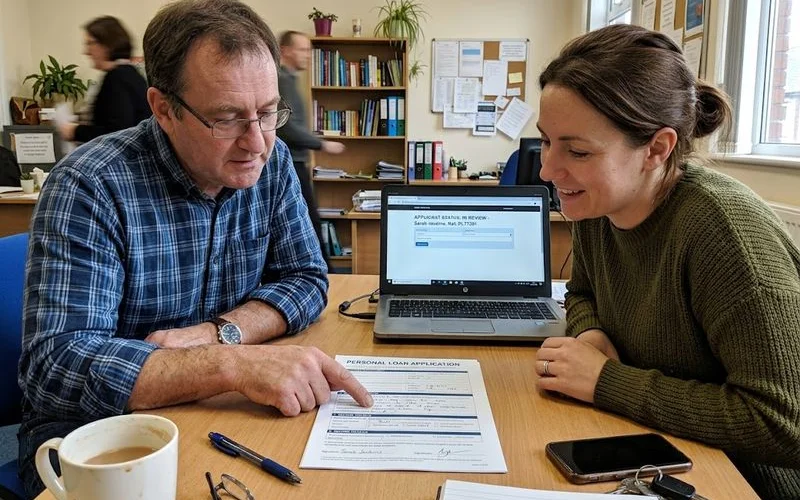
Once you submit your application, a lender typically verifies your identity and income, pulls your credit, and calculates an offer. If everything checks out and matches what you submitted, many storefront lenders can approve and fund a loan within the same day or the next business day. Online lenders vary more: some fund quickly, others take two to three business days if they need extra documentation.
Expect a short call or text at some point in the process. Lenders often follow up to confirm income, clarify a document, or explain the offer before you sign anything. Read the offer carefully. It should spell out the loan amount, the APR, the total repayment amount, and the payment schedule.
What can slow an approval down
A few things commonly stretch out the timeline:
- Income that is hard to verify, such as cash tips or irregular freelance pay
- A recent address or job change that does not match your ID or pay stubs
- Requesting an amount that is high relative to your income
- Missing or expired identification
If your first application is denied or delayed, ask the lender directly what caused it. Many storefronts will tell you plainly, and that answer often points to whether a different loan amount, term, or lender type is a better fit.
Deciding if the offer works for you
Before signing, compare the total repayment amount, not just the monthly payment. A lower monthly payment stretched over a longer term can cost more overall. If you are weighing several offers, browsing personal loan lenders in your area side by side is a reasonable next step once you know roughly what you qualify for. If the loan is meant to combine several existing debts into one payment, the guide on debt consolidation with a personal loan covers when that actually saves money.
This guide is general information, not financial advice. Loan terms, underwriting standards, and fees vary by lender, so confirm the exact numbers with the lender before you sign anything. For more on how we evaluate and rank lenders on this site, see our ranking methodology.
Questions people ask
- How long does a personal loan application take?
- In-store applications at a storefront lender can often be started and reviewed the same visit. Online applications through a larger lender may take longer if they need extra income verification. Either way, plan for at least one follow-up call or document request before funding.
- What credit score do I need for a personal loan?
- There is no single cutoff. Lenders weigh your credit history alongside income, existing debt, and how long you have held your job or lease. Some storefronts specialize in thinner credit files, which is why bad-credit-friendly lenders exist as a separate category.
- Will applying hurt my credit score?
- A lender usually starts with a soft check to give you a rate estimate, which does not affect your score. If you move forward, expect a hard inquiry, which can lower your score slightly for a few months.
- Can I apply at more than one lender?
- Yes, and comparing two or three offers before signing is normal. Just be aware that several hard inquiries in a short window can have a small, temporary effect on your score.